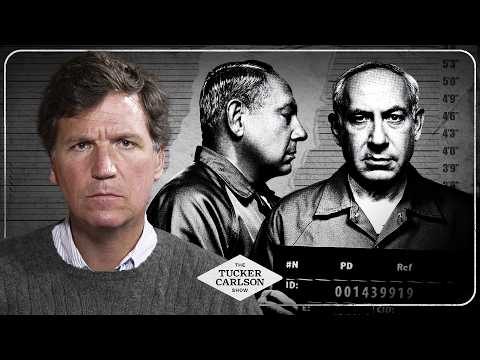
In this solo episode, Tucker Carlson explores a deeply troubling but increasingly relevant question: what happens when the CIA uses its surveillance capabilities not to protect national security, but to frame American citizens for crimes they did not commit? This episode delves into the intersection of civil liberties, government power, and the abuse of intelligence apparatus that has become a central concern for conservative critics of the administrative state.
Carlson examines documented cases and patterns suggesting that intelligence agencies have monitored private communications, including text messages, without proper legal authorization. The host argues that this represents a fundamental violation of Fourth Amendment protections against unreasonable search and seizure. More troubling still is the possibility that such surveillance data could be weaponized, used selectively to build cases against political enemies or inconvenient citizens.
The episode addresses the mechanisms through which this could occur. Intelligence agencies claim broad authority under national security statutes, often citing foreign threats as justification for mass surveillance programs. However, Carlson points out that the line between legitimate security operations and political targeting has become dangerously blurred. Once agencies have access to comprehensive communications data, the temptation and capability to misuse it for other purposes becomes significant.
Carlson traces the historical context of government surveillance abuse, referencing the COINTELPRO program and other instances where federal agencies have demonstrably targeted American citizens for political reasons. The host argues that modern surveillance technology has amplified these dangers exponentially. Where the FBI once needed to physically bug phones or intercept mail, today's intelligence community can monitor digital communications on a mass scale with minimal oversight.
A critical focus of the episode is the lack of meaningful accountability. Carlson emphasizes that intelligence agencies operate with significant secrecy, and the courts have been reluctant to challenge national security decisions. This creates an environment where abuses can occur with little fear of consequences. Whistleblowers who expose these programs face prosecution under the Espionage Act, while agency officials responsible for wrongdoing rarely face criminal charges.
The host also examines how surveillance data could be used to construct criminal cases against targeted individuals. Selective presentation of communications, combined with parallel construction techniques that hide the original source of leads, makes it extremely difficult for defendants to even discover they have been targeted. This inverts the presumption of innocence and transforms surveillance into a tool of oppression rather than security.
Carlson discusses the broader implications for American democracy and the rule of law. If citizens cannot reasonably expect privacy in their communications, and if those communications can be used against them by powerful government agencies, the foundation of constitutional government collapses. He argues this represents exactly the kind of tyranny the founders sought to prevent.
The episode concludes with practical and constitutional solutions, including strengthening Fourth Amendment protections in the digital age, imposing meaningful oversight on intelligence agencies, and holding government officials accountable for abuse. Carlson emphasizes that protecting civil liberties is not about protecting criminals, but about maintaining the constitutional order that protects all Americans from government power.