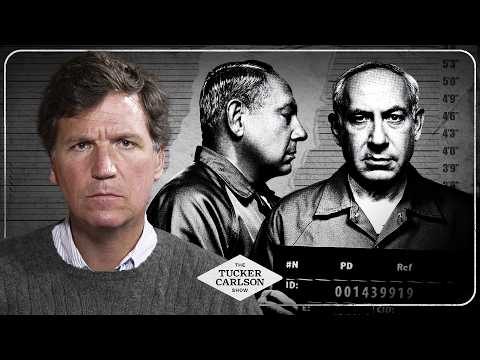
In this solo episode, Tucker Carlson delivers a speech at a Turning Point USA event in Tampa, Florida, focusing on what he views as suppressed narratives and unanswered questions about powerful institutions. The centerpiece of his address is the Jeffrey Epstein case, which he argues represents a fundamental failure of accountability and transparency in American society. Carlson questions why mainstream media outlets and political leaders have largely abandoned investigation into Epstein's background, particularly his alleged connections to foreign governments and influential figures. He suggests that institutional gatekeepers have deliberately limited public discourse around certain aspects of the case, preventing citizens from accessing complete information needed to understand what happened. Carlson contends that the Epstein story is uniquely infuriating because it exposes the hypocrisy of a ruling class that claims to uphold justice and morality while protecting its own members from scrutiny. He addresses claims about Epstein's ties to Israeli intelligence and government, arguing that this dimension of the story has been systematically removed from mainstream discussion. According to Carlson, discussing such connections has become socially and professionally risky in American media and politics. Beyond Epstein, Carlson pivots to broader critiques of American foreign policy, arguing that the nation has become trapped in pointless and endless wars that drain resources and kill soldiers without clear national interests. He contrasts these foreign expenditures with the deteriorating condition of average Americans struggling with economic pressures. The debt crisis emerges as another central theme, with Carlson presenting massive national debt as an existential threat to American prosperity and opportunity for future generations. He frames the ruling class as fundamentally detached from the consequences of their decisions, protected by wealth and power while ordinary citizens bear the costs. In the Q&A portion, Carlson addresses several politically charged topics including immigration policy and farm worker amnesty, dual citizenship, US relations with Cuba, and freedom of speech regarding Israeli government criticism. Throughout these exchanges, he emphasizes that honest debate on these subjects has become restricted by social and institutional pressure. Carlson's overarching message suggests that American institutions have failed to serve their foundational purposes of transparency, accountability, and protecting citizen interests. He positions his critique as defending the right to ask questions and seek truth, particularly on topics where institutional silence and restriction have become prevalent.