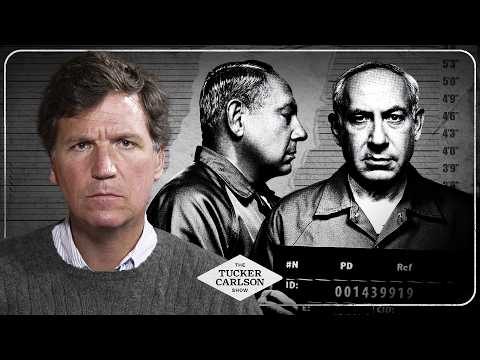
In this episode recorded during Tucker Carlson's live tour, the host engages with themes of spirituality, institutional corruption, and resistance to what both speakers characterize as globalist overreach. While presented as a solo episode, the content centers on ideas associated with critics of mainstream institutions and pharmaceutical industry influence. The discussion begins with broader observations about Western civilization's trajectory, with particular focus on America's declining health metrics and the role played by pharmaceutical companies in shaping public health policy. Brand's personal journey to Christianity and his recent baptism by Bear Grylls serves as a central narrative thread, positioning religious faith as an antidote to the materialism and control he views as endemic to modern secular institutions. The speakers explore the concept of technological and institutional power consolidating in ways that resemble attempts to replace divine authority with human-centered systems of control. This framing connects discussions of censorship, social media governance, and corporate influence as interconnected elements of a broader totalitarian tendency in the West. The episode includes analysis of recent political developments, particularly Donald Trump's re-emergence as a political force and his coalition with figures like Robert F. Kennedy Jr. and Tulsi Gabbard. These alliances are presented as potentially disruptive to established power structures that have dominated American politics and policy for decades. The speakers characterize these figures as threats to institutional gatekeepers and establishment narratives. A significant portion addresses Russell Brand's contentious relationship with British institutions and media, framing the criticism he has faced as evidence of ruling class hostility toward dissenting voices who challenge pharmaceutical industry narratives and institutional authority. The conversation emphasizes spiritual and philosophical resistance as alternatives to purely political solutions, with Brand's Christian faith presented as a framework for understanding and opposing what both speakers view as dehumanizing systems. The episode concludes with Brand offering a prayer that synthesizes the spiritual themes discussed throughout, calling for protection against materialism and affirmation of human dignity rooted in faith rather than institutional power.