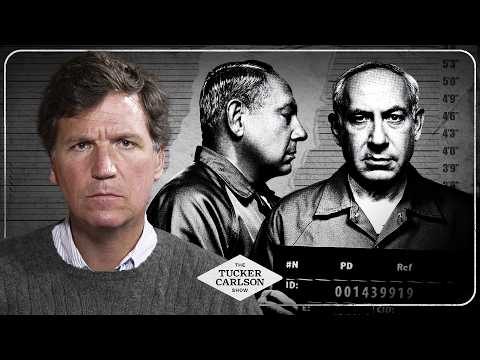
In this solo episode, Tucker Carlson addresses what he sees as a civil war consuming the American right, exploring how figures like Matt Walsh manage to maintain credibility across fractious conservative factions. The episode begins by examining the nature of this internal conflict and whether it represents a fundamental disagreement about the future of conservatism or merely performative political theater.
A significant portion of the conversation focuses on Walsh's refusal to publicly denounce his allies despite mounting pressure to do so. Tucker and Walsh discuss the counterproductive nature of these demands, arguing that forcing figures to disavow one another weakens rather than strengthens the conservative movement. This refusal to engage in public denunciations becomes a window into broader questions about loyalty, principle, and political pragmatism within the right.
The discussion pivots to foreign policy, particularly the contentious question of Israel and Gaza. Tucker explores whether it's intellectually consistent to defend Israel's military campaign in Gaza while maintaining conservative principles. This debate touches on questions of sovereignty, civilian casualties, and the role American conservatism should play in foreign conflicts. Walsh's perspective that he doesn't particularly care about Israel's situation reflects a broader shift in conservative thought away from traditional neoconservative foreign policy positions.
The episode examines why Randy Fine, a conservative political figure, would characterize the death of children as humorous, using this as a case study in how the right discusses difficult moral questions. This leads to broader questions about tone, rhetoric, and whether violence or other extralegal means might become necessary for achieving conservative goals. Tucker and Walsh debate the merits and dangers of revolutionary rhetoric versus institutional and prayer-based change.
A lighter but revealing segment discusses the decline of restaurant food quality in America, serving as a broader commentary on institutional decay and the loss of standards in American life. The episode then addresses demographic changes with the question of where white Americans have gone, reflecting concerns about cultural change and demographics that animate significant portions of the conservative base.
Tucker and Walsh explore how political labels and name-calling have become ineffective tools in current discourse, suggesting that the left's reliance on accusations of racism and bigotry no longer carries persuasive power. The conversation turns to Canada, which Walsh characterizes as embodying deadly evil under current leadership, before examining whether the transgender movement is finally experiencing decline after years of rapid cultural ascendancy.
The episode concludes by addressing how conservatives might resolve their internal civil war, emphasizing the importance of prayer alongside political engagement. Tucker and Walsh discuss whether American politics is undergoing fundamental realignment that could reshape partisan coalitions for the coming decades. Throughout the episode, the underlying theme remains how conservatives can maintain both principled disagreement and meaningful unity in an increasingly fractious political moment.