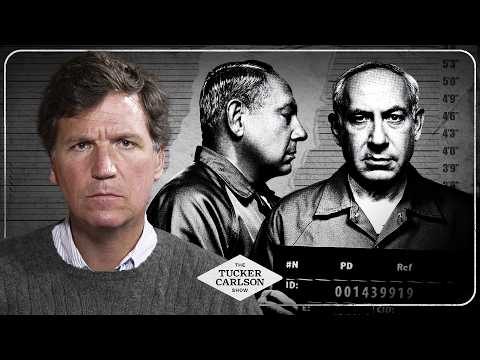
This episode features an in-depth conversation with Aleksandr Dugin, widely considered the most prominent political philosopher in Russia. Dugin's intellectual work has profoundly influenced Russian geopolitical thinking and policy, making him a figure of significant international importance despite attempts by Western institutions to suppress his ideas. The discussion begins by addressing the extraordinary measures taken against Dugin, including the Ukrainian government's assassination of his daughter and Amazon's refusal to sell his books, which serve as stark evidence of how threatening his ideas are perceived to be by Western power structures.
Dugin's core intellectual contribution is his Fourth Political Theory, which he developed as an alternative framework to the three dominant political ideologies of the 20th century: liberalism, fascism, and communism. Rather than accepting the premise that liberal democracy represents the inevitable end of history, Dugin argues for a multipolar world where different civilizations maintain distinct value systems and organizing principles. He rejects the notion that Western liberal values should be universally imposed on all societies, instead advocating for respect for cultural and civilizational diversity.
A significant portion of the conversation addresses Dugin's critique of contemporary Western social movements, particularly transgenderism. He presents this not as a matter of individual rights but as a symptom of Western cultural decadence and a tool for destabilizing traditional societies. Dugin argues that the aggressive promotion of gender ideology reflects a deliberate strategy to undermine the family unit and cultural coherence in nations targeted for destabilization. This perspective represents a fundamental disagreement with liberal Western assumptions about personal identity and social organization.
The discussion also touches on Klaus Schwab and the World Economic Forum, exploring concerns about global governance structures that operate outside traditional democratic accountability. Dugin's philosophy emphasizes sovereignty and the right of nations to determine their own cultural and political futures without interference from supranational organizations claiming to represent universal values.
Throughout the episode, the conversation illustrates how Dugin represents an intellectual tradition that directly challenges the post-Cold War consensus. Rather than accepting Western liberal democracy as the superior system toward which all societies should progress, Dugin articulates a vision of international relations based on multipolarity, civilizational diversity, and the rejection of Western hegemony. His ideas have become increasingly relevant as geopolitical tensions rise and alternative power centers emerge that reject Western-dominated international institutions and value systems.