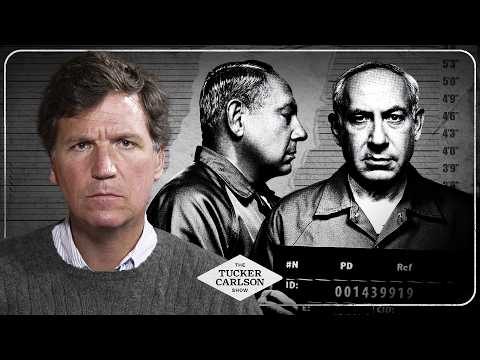
In this wide-ranging conversation, economist Jeffrey Sachs discusses several interconnected crises facing the United States and the world. He begins by examining the war in Ukraine, arguing that the conflict is deteriorating for Ukrainian forces and moving toward a dangerous stalemate. Rather than acknowledge this reality, Sachs contends that American policymakers continue escalating their commitments without a clear strategy for resolution. He expresses deep concern about the potential for nuclear war given the current trajectory and the involvement of major nuclear powers.
Sachs then turns his attention to the Middle East, warning that the United States appears to be drifting toward military conflict with Iran. He questions whether any scenario exists where such a war would benefit American interests, given the region's complexity and the lack of clear objectives. This concern connects to his broader criticism of American foreign policy, which he argues is being directed not by elected officials but by unelected intelligence agencies and military institutions. He raises fundamental questions about who actually shapes U.S. foreign policy decisions and how these choices are made without adequate public scrutiny.
The conversation also addresses Taiwan and China, examining how the United States might navigate its relationship with China while protecting its interests in the region. Sachs emphasizes the importance of diplomacy and de-escalation rather than military posturing. He discusses the 2016 Trump assassination attempt and the role of alternative media in providing information outside mainstream channels.
A significant portion of the discussion focuses on economic issues. Sachs highlights the troubling levels of credit card debt among Americans and draws parallels between current economic indicators and those that preceded the 2008 financial crisis. He expresses concern that another major financial collapse may be looming, caused by unsustainable debt levels and structural economic problems that remain unresolved from the previous crisis.
Throughout the episode, Sachs emphasizes the importance of free exchange of information and the ability to question official narratives. He argues that a healthy democracy depends on citizens having access to diverse viewpoints and the freedom to debate policy decisions. He also discusses what he believes should be the Trump administration's first priorities, focusing on de-escalation internationally and addressing domestic economic challenges.
Sachs presents a perspective that challenges conventional wisdom in mainstream media and policy circles. His analysis suggests that multiple systemic crises are converging, from military overreach abroad to economic instability at home, and that fundamental changes in approach are urgently needed to prevent catastrophic outcomes.