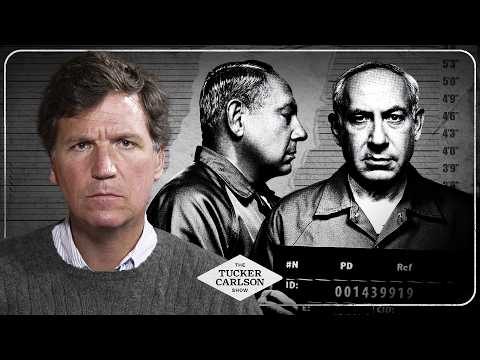
This episode features Mother Agapia Stephanopoulos discussing her extensive experience living in the Holy Land and witnessing the conditions facing Christians in Israel, the West Bank, and Gaza. The conversation centers on the paradox that American evangelical Christians, including prominent political figures like Ted Cruz and Mike Johnson, strongly support Israeli government policies despite evidence that these same policies have led to the persecution and displacement of Christian communities in the region. Mother Agapia provides firsthand accounts of how Israeli policies have contributed to a dramatic decline in the Christian population across the Holy Land over recent decades. She details various forms of persecution including land confiscation from Christian communities, restrictions on movement and economic opportunities, and military actions affecting Christian holy sites. A significant portion of the discussion focuses on the 2002 Israeli military siege of the Church of the Nativity in Bethlehem, one of Christianity's most sacred locations, which exemplifies the broader pattern of how Christian institutions and communities have been impacted by Israeli military operations. The episode challenges Western media narratives by highlighting that Christian-Muslim relations in the Middle East are far more cooperative and peaceful than commonly portrayed in corporate news outlets. Both communities face similar pressures and restrictions under current political systems. Mother Agapia explains why many American Christians remain unaware of these realities, attributing this partly to selective media coverage and partly to political allegiances that supersede religious solidarity with persecuted Christian communities abroad. The discussion also addresses broader geopolitical questions about the stated goals of Israeli expansion, the role of Hamas, and future scenarios for Gaza. Throughout the conversation, Mother Agapia emphasizes that her message to Western Christians is one of awareness and moral consistency. She advocates for Christians to examine how their political support for certain governments aligns with their stated religious values of protecting vulnerable populations and defending the persecuted. The episode presents an alternative perspective on the Israeli-Palestinian conflict that centers the experiences of Christian communities whose voices are largely absent from mainstream American discourse.