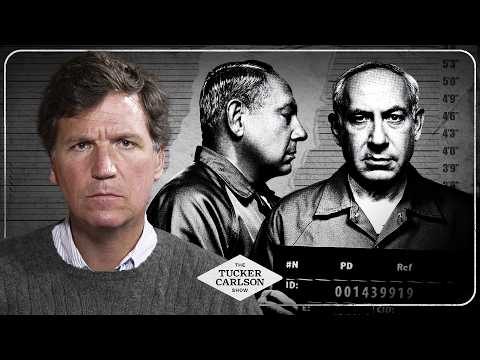
This episode features a discussion centered on George Galloway, a prominent British politician who has been elected to parliament seven times. Galloway's case raises serious concerns about free speech and political persecution in modern Britain. After publicly criticizing the Ukraine war, Galloway was detained by anti-terrorism police and had his property confiscated. He is now living in exile, forced to leave his country because of his political speech on a major geopolitical issue. The conversation explores the troubling implications of his treatment and what it reveals about the state of democratic freedoms in the West.
The episode examines how Galloway, despite being a conservative on many issues, faced severe consequences for expressing dissent on Ukraine policy. His detention raises fundamental questions about whether free speech still exists as a protected right in Britain or whether it has become conditional on accepting approved narratives. The discussion notes that few public figures or institutions have come to Galloway's defense, suggesting a broader climate of fear and conformity among elites.
A significant portion of the conversation addresses the decline of the British Labor Party. Once a party of principle and working-class representation, the Labor Party has allegedly lost its way, abandoning its core values and its constituency. The episode suggests that the party has become disconnected from the people it once represented and has embraced policies that contradict its historical mission.
The discussion also delves into the underlying motivations behind Western involvement in the Ukraine conflict. Rather than humanitarian concerns, the conversation suggests that geopolitical strategy and economic interests drive Western policy. The episode questions whether the costs of this involvement are justified and whether they serve Western interests or undermine them.
A central theme is the apparent self-destructive nature of Western policies. The discussion argues that the West is pursuing courses of action that weaken its own position, economy, and social cohesion while failing to achieve stated objectives. The episode examines how institutional corruption, ideological rigidity, and loss of democratic accountability have created a system serving elite interests rather than public welfare.
The conversation concludes by exploring what would be necessary to restore health to Western institutions. This requires reestablishing free speech protections, reinstating genuine democratic accountability, and returning to policies based on reason and national interest rather than ideological dogma. The episode suggests that fundamental reforms are needed to save Western civilization from its current trajectory.