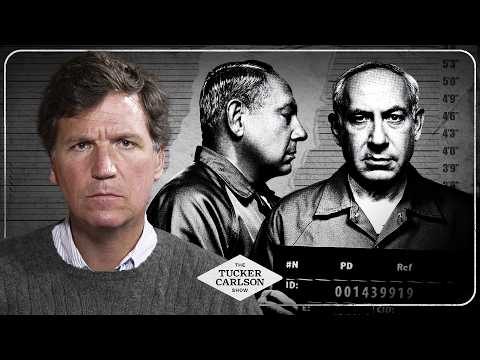
In this episode, Avraham Burg, former Speaker of the Knesset and interim president of Israel, provides a critical analysis of Israeli politics under Netanyahu's leadership and the ongoing conflict in Gaza. Burg argues that Netanyahu's political strategy is fundamentally predicated on perpetual conflict rather than peace, suggesting that the prime minister cannot settle disputes through negotiation and instead relies on military action to maintain political power and legitimacy.
The discussion explores what victory actually means for Israel in Gaza, with Burg indicating that the lack of clear objectives suggests the conflict may be intentionally designed to continue. He examines whether Israel genuinely seeks peace, concluding that under current leadership, peaceful resolution is unlikely because peace would undermine the political structure that keeps Netanyahu in power.
Burg addresses the role of the United States in the conflict, questioning whether America was forced into supporting Israel's military actions or whether it represents a strategic alignment. He discusses whether Netanyahu fears incoming leadership and how geopolitical shifts might affect Israeli calculations. The conversation turns to potential American gains from the conflict, examining economic, strategic, and geopolitical interests.
A significant portion addresses how ordinary Israelis view Gaza and Palestinians, exploring the cultural and psychological dimensions of the conflict. Burg also discusses Israeli perceptions of the United States and how that relationship shapes policy decisions.
The episode delves deeply into the religious dimensions of the conflict, particularly the Third Temple movement. Burg explains how this religious ideology influences mainstream Israeli politics in ways often invisible to outside observers. He chronicles numerous historical attempts to rebuild the Third Temple and how this theological objective intersects with contemporary political and military strategy.
Burg analyzes how Netanyahu has fundamentally transformed Israeli politics forever, changing not just policy but the underlying democratic institutions and political culture. He addresses the Greater Israel Project, explaining its status as a concrete geopolitical objective rather than merely theoretical ideology.
The conversation concludes with an examination of nuclear weapons as a factor in regional calculations. Burg assesses the real risk of Israeli nuclear weapon use and how this capability factors into international diplomacy and regional power dynamics.
Throughout the episode, Burg draws on his extensive experience in Israeli government and politics to provide insider perspective on how ideology, religious conviction, and political calculation intersect to shape military strategy and foreign policy decisions.