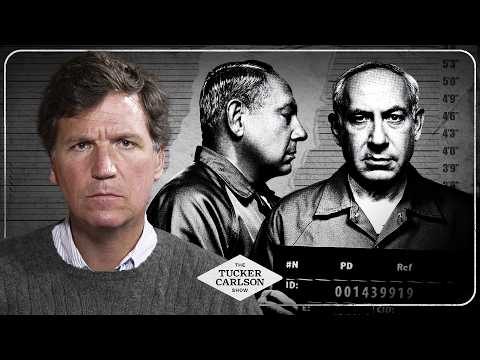
In this episode, Darryl Cooper joins to discuss his work as a revisionist historian challenging mainstream narratives across multiple significant historical topics. The conversation begins with an examination of the Israel-Palestine conflict, where Cooper provides historical context often absent from contemporary media coverage. He traces the origins and development of tensions in the region, offering perspective on how the conflict became what it is today.
The discussion then shifts to the Jonestown cult, exploring the historical facts surrounding one of America's most disturbing events. Cooper examines what actually happened and how the narrative has been shaped in popular memory. This leads into a broader conversation about how history gets rewritten and propagandized, a central theme throughout the episode.
A significant portion focuses on World War Two, where Cooper presents alternative interpretations of conventional historical understanding. He challenges the standard narrative surrounding Winston Churchill, arguing that Churchill's role in European history has been sanitized and that his decisions had devastating consequences for Europe. Cooper suggests that much of what is taught about WWII reflects propaganda rather than objective historical analysis.
The conversation expands to include discussion of mass immigration in Europe, examining the historical patterns and policy decisions that led to current demographic changes. Cooper contextualizes these policies within broader historical and political movements, questioning how they are discussed and whether accurate historical analysis informs current debates.
Cooter also addresses how various political leaders, including Viktor Orban, Vladimir Putin, and Donald Trump, are understood through historical context. He suggests that understanding these figures requires looking at historical precedent and motivation rather than accepting media narratives at face value.
Throughout the episode, religion and Christianity are discussed as historical and cultural forces shaping societies. The final segment emphasizes how hatred blinds people to objective truth and historical reality, suggesting that emotional reactions often prevent honest historical analysis.
The central argument threading through the conversation is that popular history in the United States and the West has become heavily propagandized, with official narratives often conflicting with documented facts. Cooper advocates for independent historical thinking and questioning mainstream accounts, particularly regarding WWII, which he describes as the most forbidden historical topic to examine honestly. The episode challenges listeners to think critically about the history they have been taught and to consider alternative interpretations of major historical events.